From Lecture Theatre to Laboratory: MSc Students Get Hands-On at the PQC
- Details
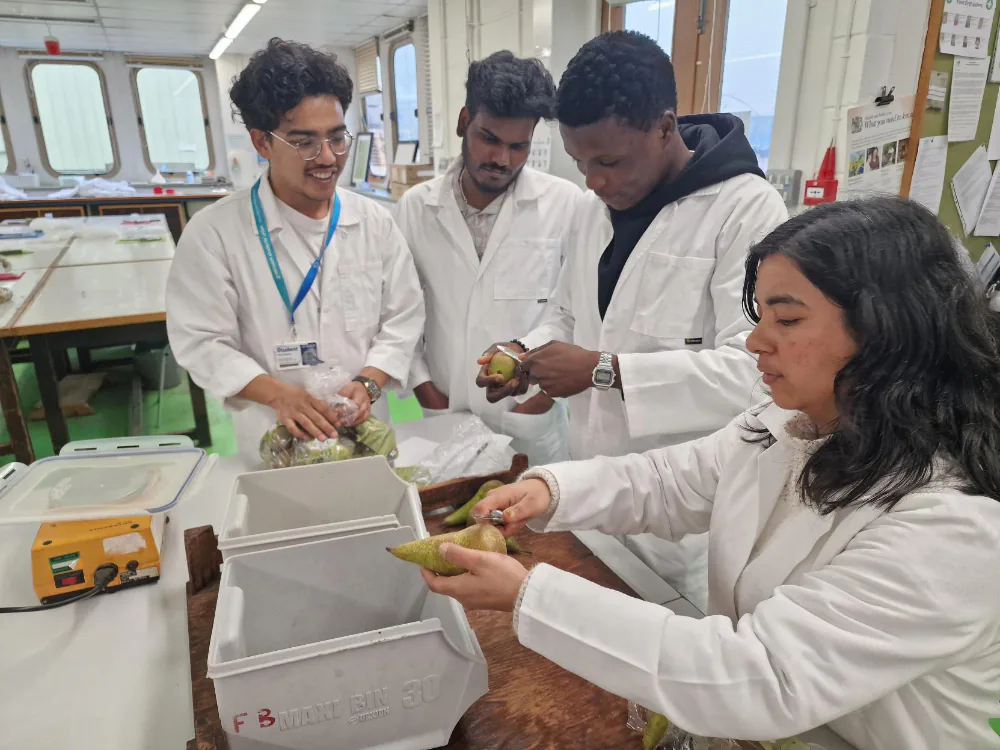
What happens to a pear after it's picked? How does cold storage affect its texture, taste and shelf life? And what can the way it loses moisture tell us about the science of keeping fresh produce at its best? These are the kinds of questions that students from across NRI's postgraduate programmes are exploring first-hand at the Postharvest Quality Centre (PQC) - a specialist facility where the science of keeping fruit and vegetables fresh comes to life.
Students from the MSc Applied Food Safety and Quality Management, MSc Agriculture for Sustainable Development, and MRes Natural Resources programmes all visit the PQC as part of their FOOD 1021: Postharvest Technology of Fruits and Vegetables module. For many, it's their first opportunity to step out of the lecture theatre and into a working laboratory environment where real experiments produce real data. During these practical sessions, students work directly with fresh produce - currently pears - to investigate how quality changes during storage. They measure parameters such as weight loss, firmness, and visual appearance, linking their observations to the key physiological processes that drive postharvest quality change: respiration, moisture loss, and the gradual deterioration that affects everything from flavour to marketability. It's not just about recording numbers - students design their own experiments, monitor changes over time, and interpret their results in the context of the postharvest management strategies used by the global fresh produce industry.

For some students, the experience goes even further. As part of their dissertation or research training, they carry out short independent research projects at the PQC, typically running over one to two months. These projects tackle a wide range of postharvest challenges - from investigating the effects of cold storage on fruit quality and evaluating how 1-MCP treatments influence ripening and shelf life, to comparing how different packaging systems affect moisture loss and product appearance. Other projects may explore storage disorders, track physiological changes during extended storage, or assess the effectiveness of different handling strategies in preserving the quality of fruit and vegetables after harvest.

Working under controlled conditions with access to specialist equipment, students collect and analyse their own experimental data; building the kind of practical, evidence-based skills that are highly valued across the food and agriculture sectors. Throughout it all, students benefit from expert guidance from the PQC team, including Richard Colgan and Debbie Rees, whose combined knowledge of postharvest science and laboratory practice ensures that every student gets the most from their time at the centre.
It's a unique aspect of studying at NRI - the chance to work in a dedicated postharvest research facility, tackling the same questions that the industry faces every day, and developing the skills and confidence to make a real contribution to the future of food quality and safety.